About Me
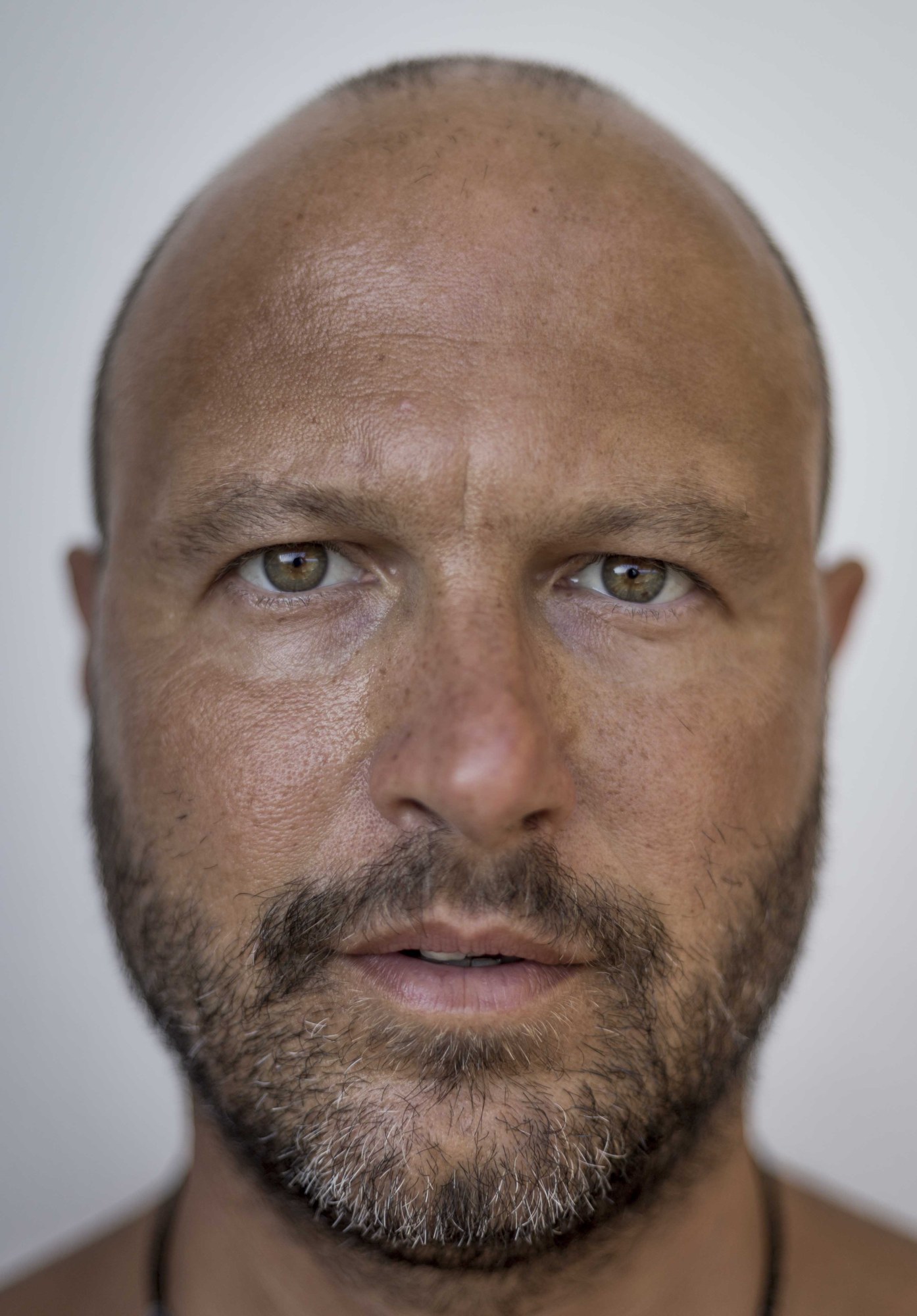
Lorenzo Moscia
Documentary Photographer & Filmmaker
Born in Rome on September 6, 1973, compelling documentary filmmaker, photojournalist, and composer whose career bridges investigative depth with rich artistic expression. His professional path took an unconventional turn; after earning his Law Degree from Rome’s Università La Sapienza in 1999 and completing a year of legal training, he decided to completely leave the legal field behind to devote his life to photography. A transformative journey soon led him to settle in Chile for fifteen years, a period that deeply rooted his photographic gaze in the reality of Latin America and established him as a key correspondent for the prestigious Italian agency Grazia Neri. Today, he operates fluidly between Rome and Santiago, specializing in powerful investigative reportages, social justice issues, and international assignments.
As a versatile visual storyteller, his lens captures the raw truths of human endurance and ecological vulnerability across the globe. Throughout the years, he has carried out major field assignments for influential non-governmental organizations and institutions, including the World University Service of Canada (WUSC), Infinithium Humanitarian Systems (IHS), the Roddenberry Foundation, Greenpeace Italy, and Greenpeace Chile. His assignments have taken him to some of the most remote and challenging corners of the world, from the Philippines, Nepal, and Sri Lanka to Tanzania, Kenya, Mexico, the Marshall Islands, and across Italy. His striking photo-essays and documentary features have been widely published in leading international magazines and newspapers, including Der Spiegel, The Sunday Times, Maclean’s, Bloomberg, The Chicago Tribune, Internazionale, Venerdì di Repubblica, and Io Donna Corriere della Sera.
Moscia’s long-term immersive approach has resulted in deeply descriptive photographic books and human-centric audiovisual projects. In 2002, he published his first photographic book, Luces de Rapa Nui exploring the intimate daily lives of Easter Island's inhabitants. He returned to industrial narratives in 2009 with Lota, a poignant portrayal of the harsh, enduring struggles faced by former coal miners in Chile. When the eyes of the world turned to the Atacama Desert in 2010, he documented the gripping tension and emotional relief of the San José mine collapse in his acclaimed book Campamento Esperanza, which chronicled the miraculous rescue of the 33 trapped Chilean miners. His later audiovisual work includes Haiyan Aftermath, a harrowing documentary that captures the devastating impact of one of the most powerful typhoons ever recorded on Earth as it tore through the Philippines.
His artistic sensitivity extends beyond the lens; Moscia frequently composes the original soundtracks for his own cinematic releases, blending evocative soundscapes with striking imagery. His feature-length documentary By the Shade of the Moai (A la sombra del Moai), which explores the rapid modern transition of Easter Island, earned widespread acclaim, including the Jury Prize at the Santiago International Documentary Festival (FIDOCS), the Jury Prize at the Viña del Mar Festival, the Latin Film Festival in Brussels, and Best Documentary at the DIFF Festival in Patagonia, Chile. Similarly, his intimate documentary Arroz con Mango, which offers a deeply personal look into contemporary Cuban reality, garnered significant festival attention. In 2022, he expanded his human rights portfolio by directing and scoring Nel nome di Gerry Conlon (https://www.google.com/search?kgmid=%2Fg%2F11kk7jf_6_&q=Nel+nome+di+Gerry+Conlon) (In the Name of Gerry Conlon), a powerful feature documentary built around historic interviews examining the life and enduring systemic trauma of the wrongly accused Guildford Four member.
In recent years leading up to 2026, Moscia has significantly broadened his focus toward environmental media production and political street reportage. Collaborating with organizations like Greenpeace Italy, the Blue Marine Foundation, and the DISTAV of the University of Genoa, he has used advanced drone and deep-sea diving capabilities to visually track climate change impacts, coral health, and Posidonia oceanica meadows across Marine Protected Areas such as Tor Paterno, Tavolara, Ventotene, Asinara, and Liguria. Simultaneously, his photography has captured crucial societal shifts on the ground—ranging from street life and major anti-war protests in Rome and the Vatican, to active documentation of the artisanal fishing communities and gold miners back in Chilean Patagonia and the Atacama.
Over his nearly three decades in the field, Moscia’s evocative imagery has been exhibited in galleries across Chile, Italy, and Japan, earning prestigious international accolades. He has been repeatedly honored by the Asociación de Reporteros Gráficos de Chile (FotoPrensa), securing first place in their photojournalist awards in 2006, 2008, 2013, 2014, and 2016. His international recognitions span from winning first place in the United Nations "Ojo con Chile" contest in 2002 to receiving the first prize from the Inter-American Institute of Human Rights in Costa Rica (2008) for his illustrated reportage on Brazilian favelas. In Italy, his work has been celebrated with the first prize at the "La Repubblica" Shooting Rome awards in 2012, alongside consecutive first-place victories at the Chatwin Prize in Genoa for his documentaries Luci di Rapa Nui (2006) and Arroz con Mango(2008), confirming his status as a profoundly empathetic and evolving voice in contemporary documentary arts.